
Things we get asked a lot…
Frequently asked questions
LEO stands for Lyons’ Electronic Office – shortened to LEO.
The first LEO (Lyons Electronic Office) was not invented by one single person, but brought to life in 1951 by a team at Lyons Systems Research Office, which was led by John Simmons, a Cambridge mathematics graduate and chief statistician for the company. Simmons’ belief that automation could ease the burden of office administration.
Yes. Lyons’ Electronic Office is widely recognised as the world’s first business computer, and was constructed in conditions of some secrecy so that competitors would not beat the company to it.
Yes. LEO (Lyons Electronic Office) is recognised as being the world’s first business computer by Guinness World Records. More details can be found here.
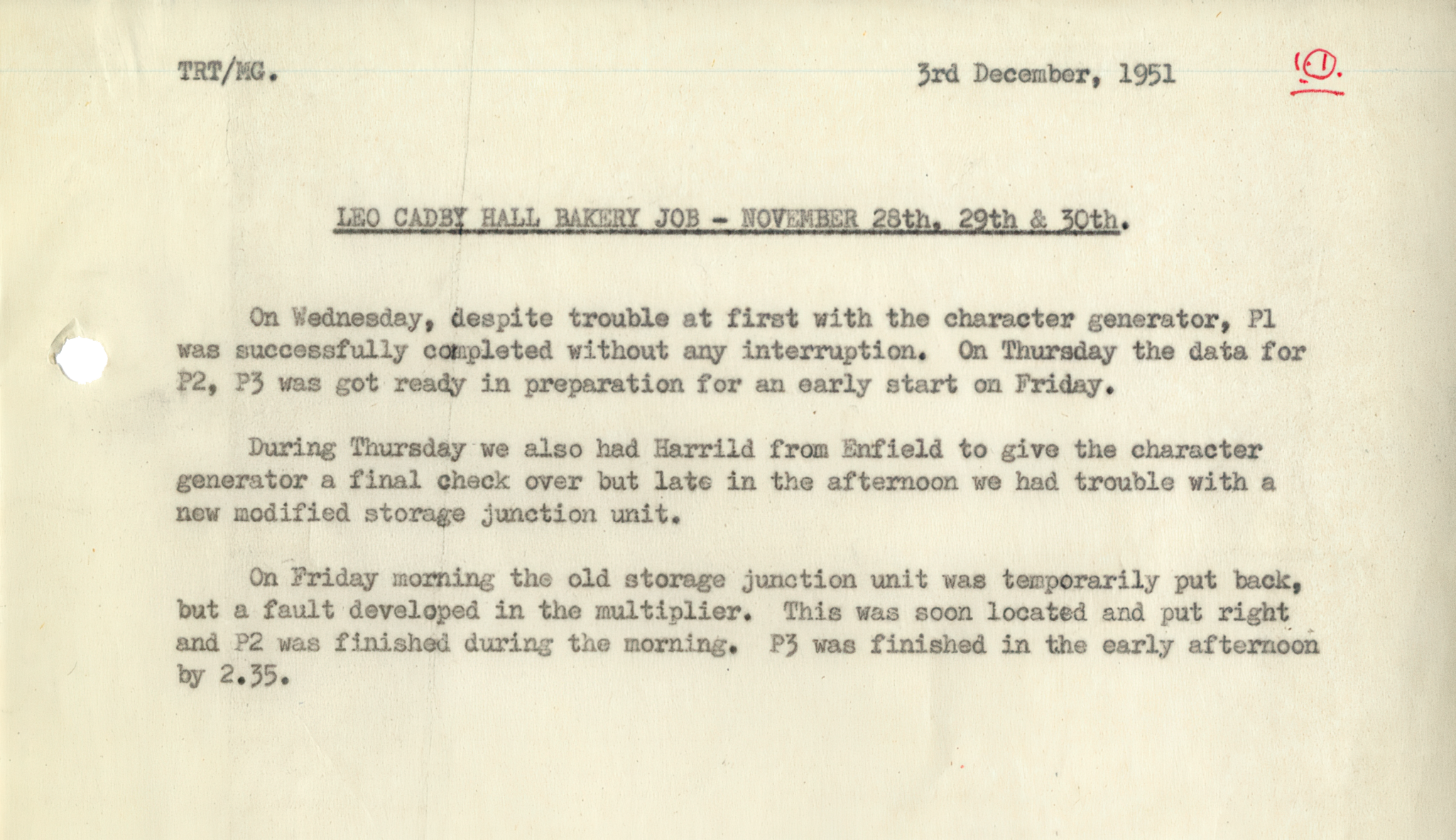
According to David Caminer’s records, LEO started on 28 November 1951, but ran its first full program (or operational run) without any interruptions at 14:35 on 30 November 1951. It had taken three days. You can read more here, or at the Centre for Computing History
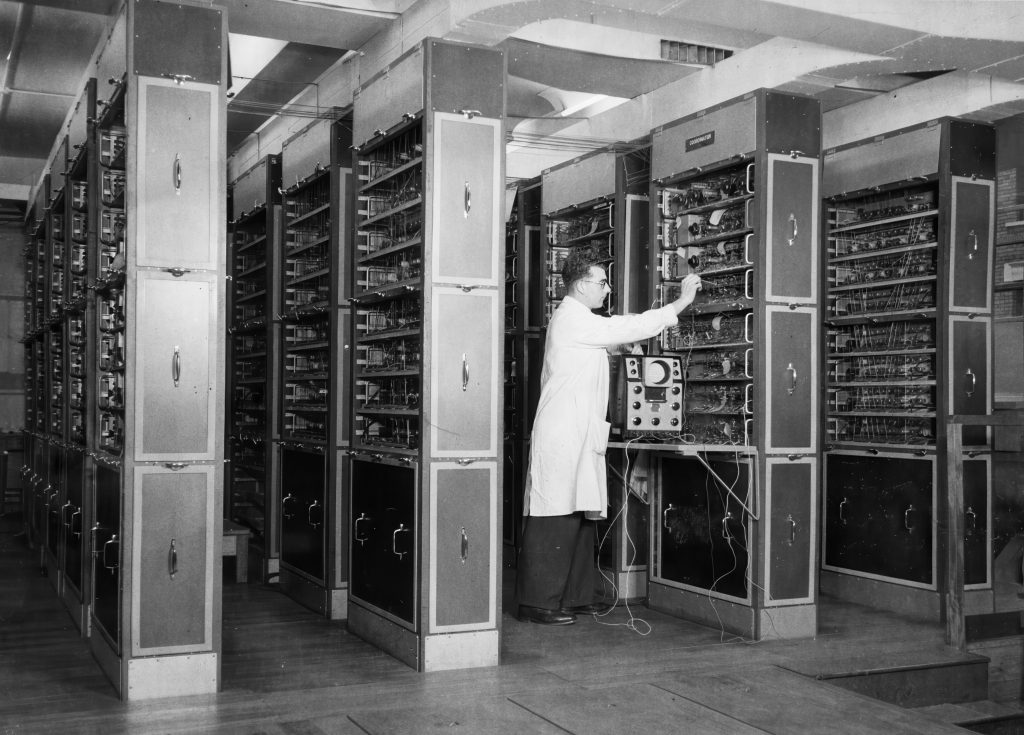
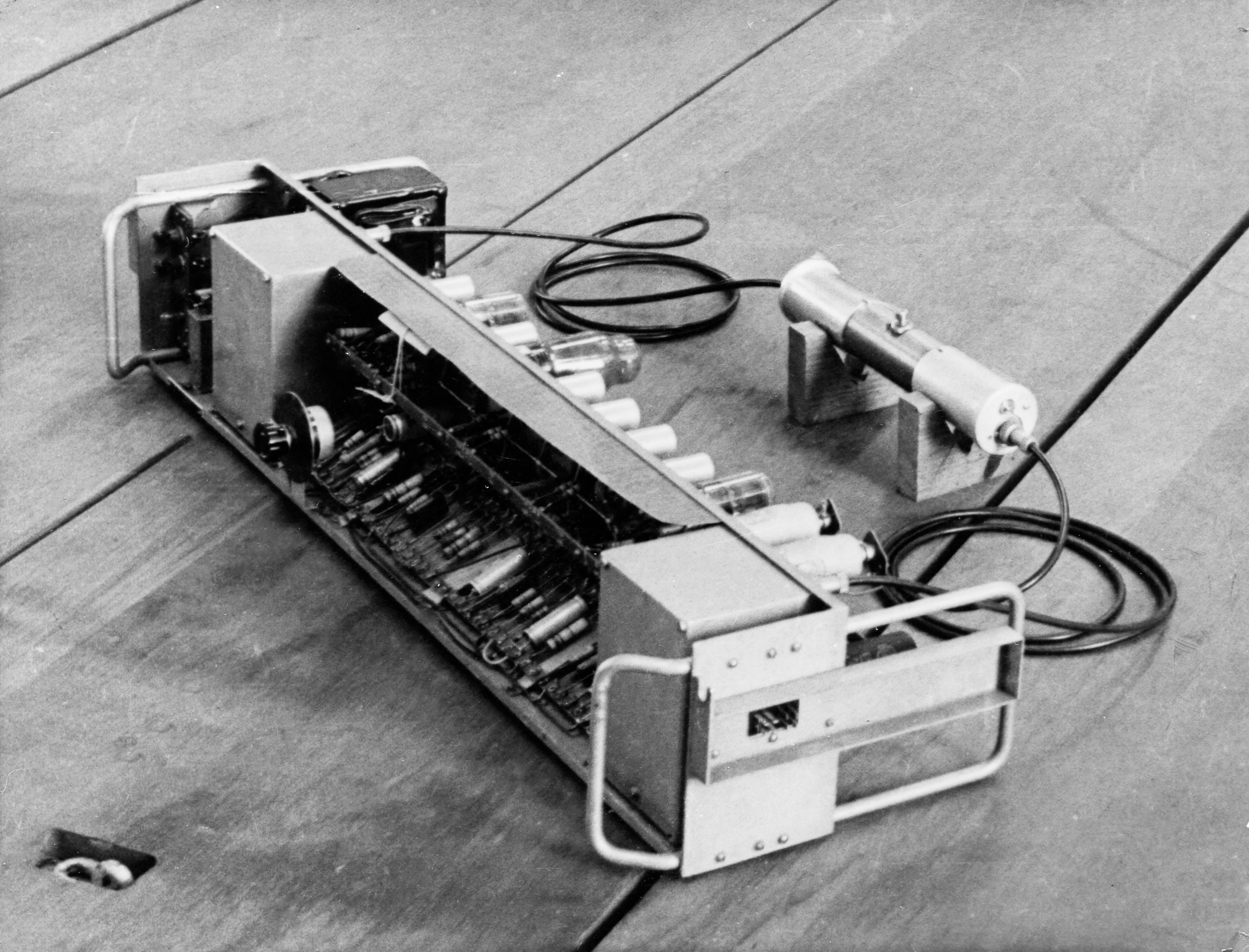
Its computing power was tiny compared even to smart watches or sat navs today – its CPU ran at 500Hz and its memory could hold 2048, 35-bit words, amounting to over eight kilobytes, with card readers and paper tape readers and punches as removable storage.
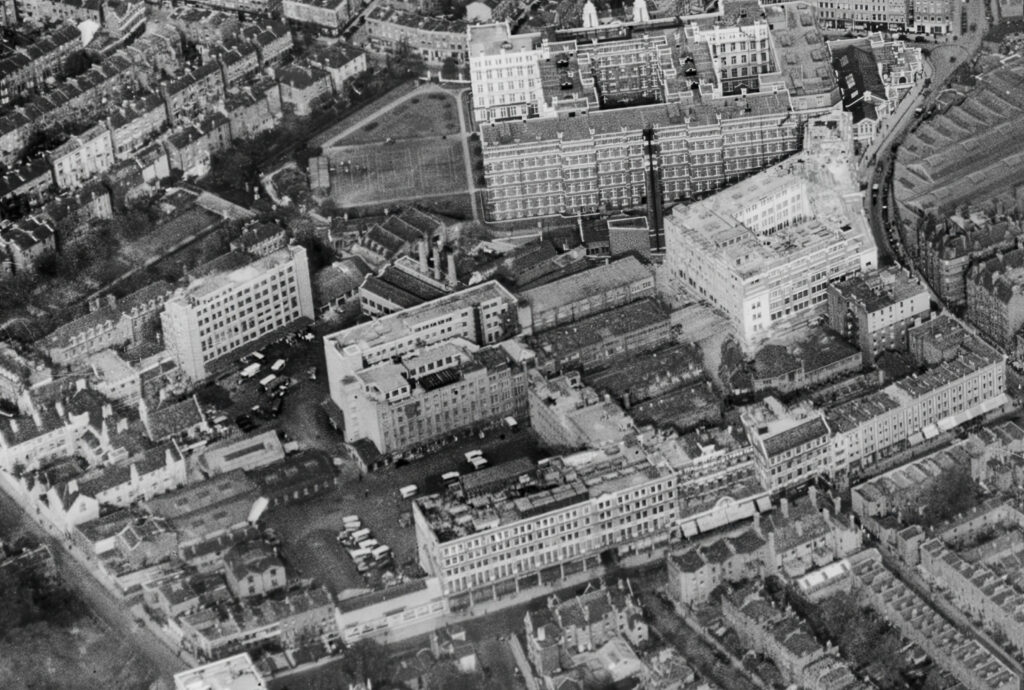
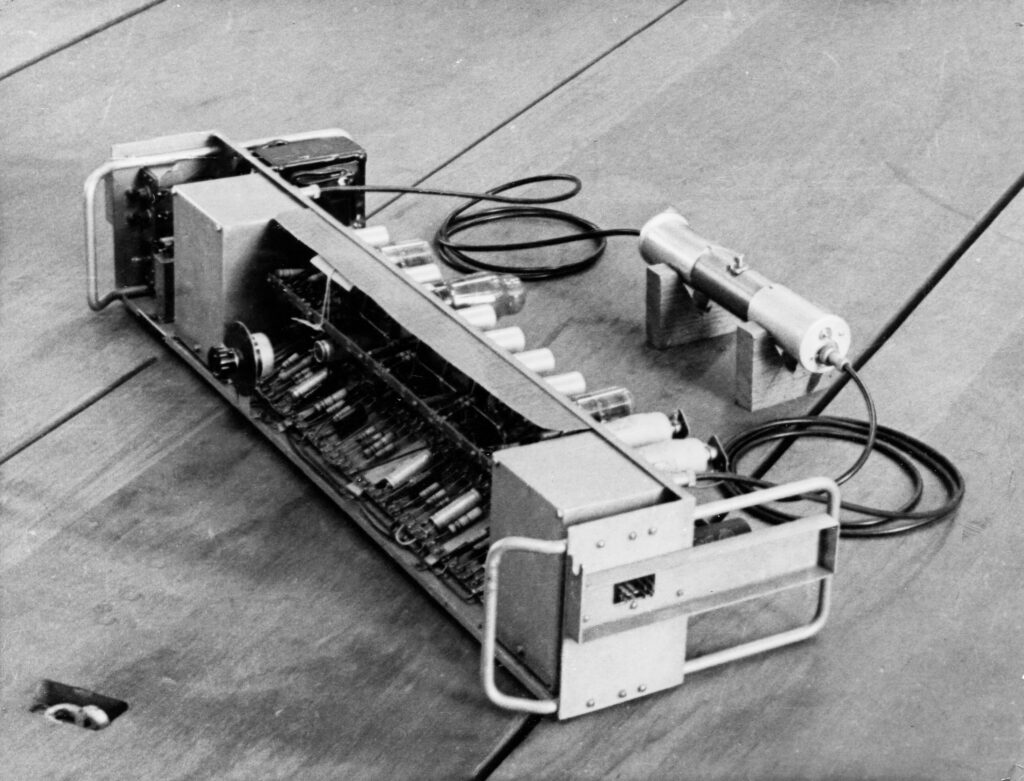
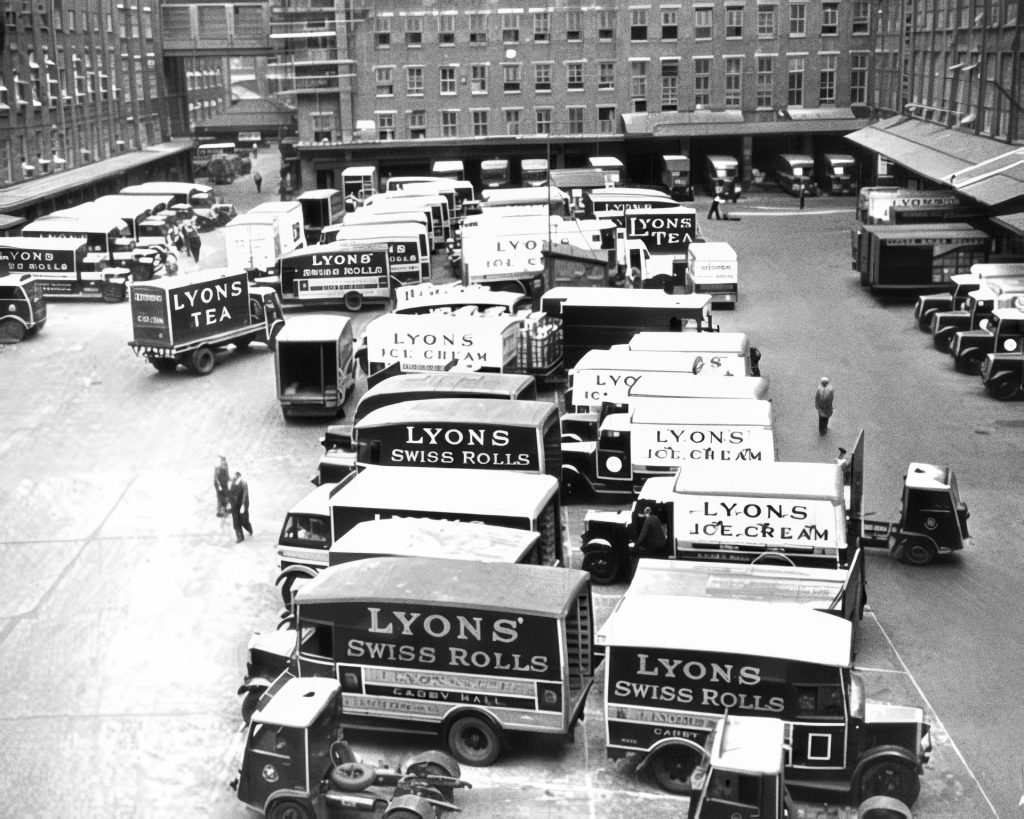
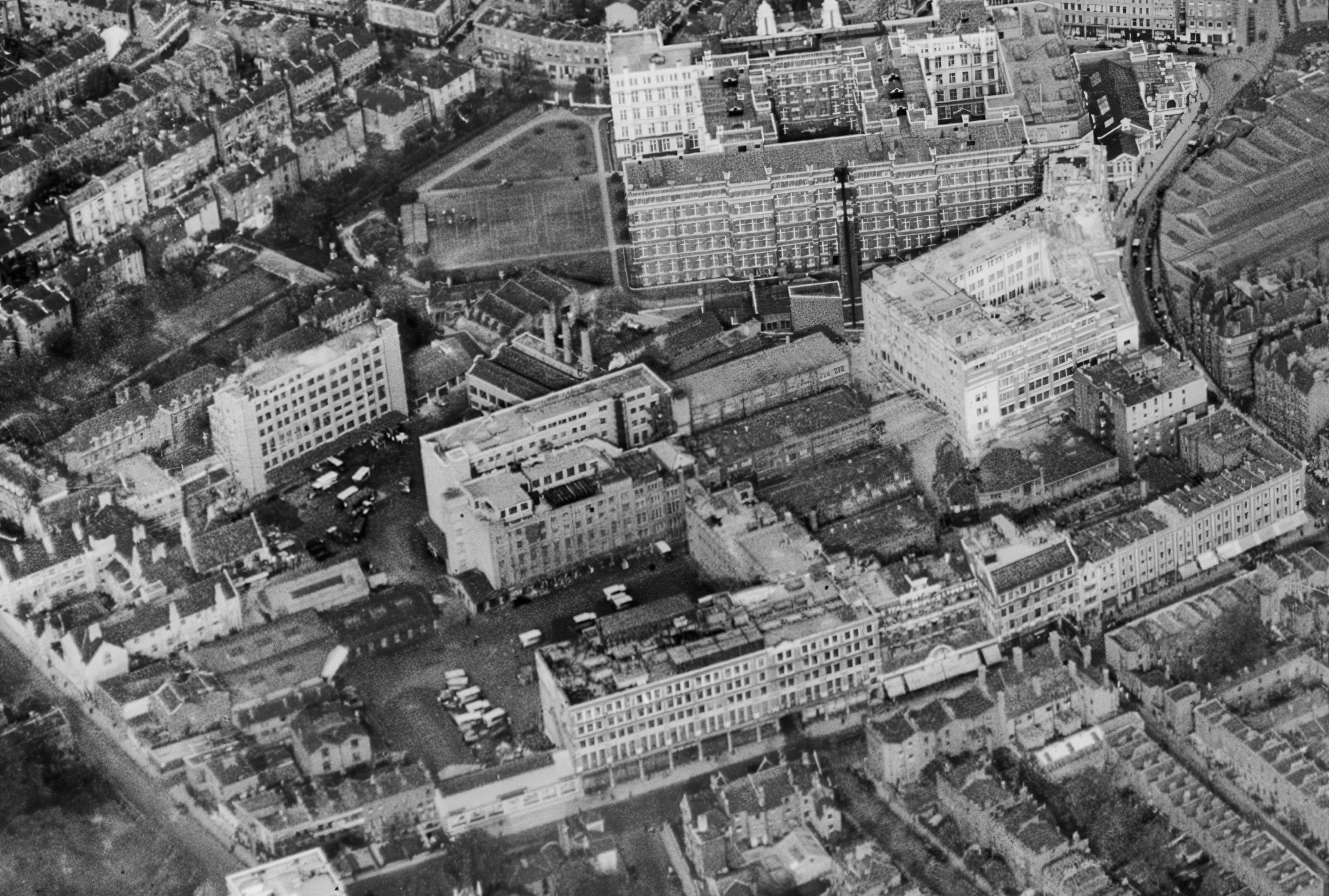
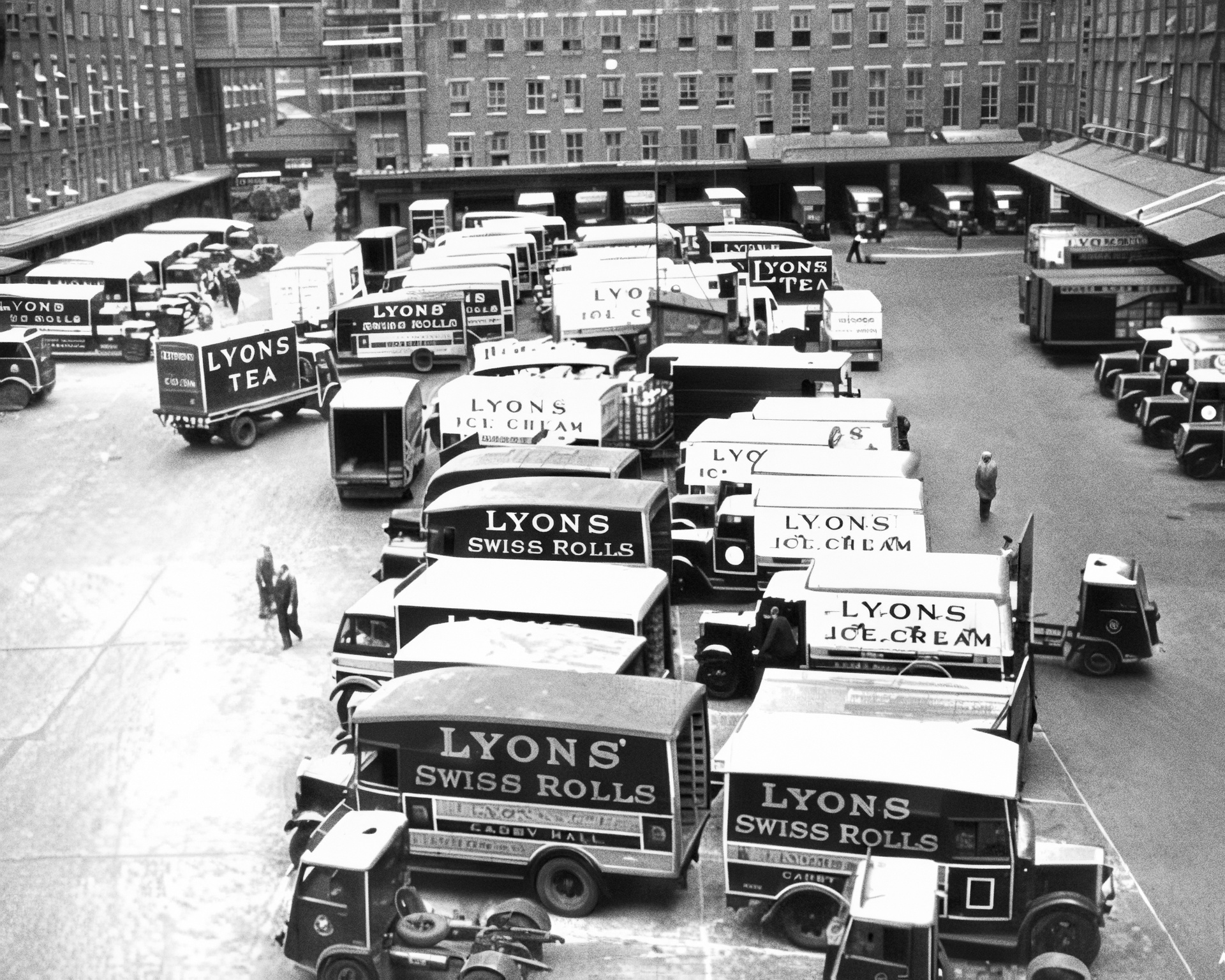
LEO was huge, taking up 2,500 square feet in Cadby Hall – and Cadby Hall was the size of eight football pitches. More than 6,000 valves and 64 mercury delay-line tubes built into a body that filled that room at Cadby Hall.
[LINK TO CADBY HALL IMAGE]
J. Lyons & Co. was incorporated by Joseph Lyons and others such as Barnett Salmon in 1894, but the original company no longer exists. The company was acquired in 1978 by Allied Breweries and gradually sold off in the 80s and 90s. You may occasionally see a Lyons Teashop sign in teashops around the country, so do look out for them.
Through her mother, Vanessa Salmon, Nigella Lawson is an heiress to the remains of the J. Lyons & Co. empire, with her great-great-grandfather Barnett Salmon among the company’s founders.
Many people contributed to the success of LEO, but the team was headed by John Simmons, the visionary chief statistician and head of Lyons’ Systems Research Office. He sent Oliver Standingford and Raymond Thompson on a fact-finding mission to the U.S., and recruited other key figures such as Dr John Pinkerton recruited from Cambridge University as chief engineer. Other key figures include David Caminer, now seen as a pioneer of business systems analysis, and Derek Hemy LEO’s principal programmer.
LEO is absolutely foundational to modern business computing, and to the business world we inhabit today. Concepts, methodologies, processes and practices around using computers for payroll, inventory, data processing and automated supply chains were all pioneered by the LEO team, sowing the seeds for what would become business systems analysis, Enterprise Resource Planning (ERP) and IT departments worldwide for the next seven decades.
LEO was built at Cadby Hall in Hammersmith [66 Hammersmith Road,] in London, which was the headquarters and factory for J. Lyons & Co. The vast machine was built in a room measuring 2,500 square feet.

At its peak, there were 253 Lyons teashops, plus a smaller number of Corner Houses and Maison Lyons outlets, spread across London and towns in southern England.
The Centre for Computing History holds a wealth of material about LEO which can be explored online. It also offers a programme of school visits for young people to learn about LEO. Visit this link here for more information.
The actual physical LEO computers were dismantled decades ago (they were huge, and preserving them was impractical), and no fully functional machine remains. The Science Museum has an impressive display with photos and artifacts, and Cambridge’s Centre for Computing History offers a LEO archive, and a Virtual LEO experience which allows visitors to explore the original Cadby Hall computer room.
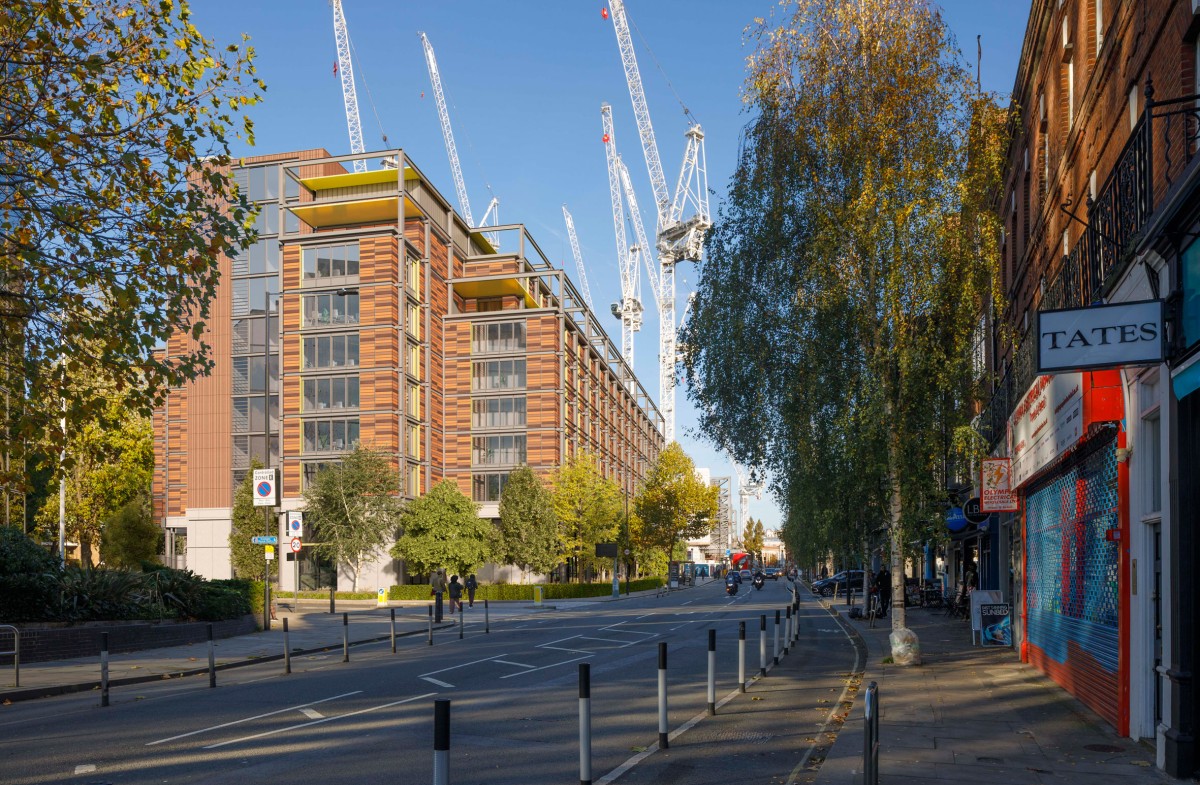
After the takeover and break-up of Lyons, both of its major sites were redeveloped, with Cadby Hall (home to LEO) demolished in 1983 and replaced by office blocks. Diligent explorers can still find the road named “Lyons Walk” off the Hammersmith Road in London, and the inscribed stone commemorating the events of November 1951. The public house – The Queens’ Head – where staff of Lyons and LEO Computers went often for refreshment still exists today.
The visit was not fully secret, and images of her visit to the bakery were made public, but LEO itself was unfinished and staff feared leaking information to competitors, so the court correspondent who accompanied Princess Elizabeth dropped back when they visited the machine, which performed a demonstration for the young Princess Elizabeth.
Companies such as Ocado do not use the LEO system, but LEO’s breakthrough in calculating multi-variable requirements at the same time (such as valuations and stock levels) was the foundation of modern automated fulfillment platforms like Ocado Smart Platform which predict demand, manage stock and update inventory in real time.
Physical computers and the way we manage information has changed since 1951, but many of the ‘batch’ processes and methods created by the LEO pioneers and used in LEO software, like sorting records into order, or filtering one type of record from others can still be seen in today’s big commercial IT systems. Nobody had conceived of the Internet back then, but the computer room in which LEO was built and worked, consuming input data and producing printed results, with access limited to select trained operators and engineers, was not that different from one of the giant server farms that perform much of today’s ‘cloud’ computing.
Ford in Dagenham, de Havilland, the British Government, weather/meteorological services and the General Post Office to name a few.
When landline telephones entered British households in the 1960s, the British Post Office (forerunner of BT and then the monopoly telephone service in Britain) used LEO Computers for its first automated billing systems to cope with the enormous surge in users. Computer centres in London (very near to the J. Lyons & Co. Cadby Hall site), Leeds, Cardiff and Edinburgh were each equipped with several LEO III computers. Punch cards from telephone exchanges were sent to human operators who worked 23 hours a day in shifts to process it and produce quarterly printed bills posted to every household and business with a telephone. The LEO software for telephone billing was so efficient that it was still in use as late as 1982 – long after the last LEO computer hardware had been retired, with newer computers (the ICL 2900 series) made to emulate LEO to run it!
The LEO computers operated by the General Post Office became a nationalised public sector computer bureau service, the ‘National Data Processing Service’, offered to companies that could not afford to buy or run their own computers. LEO computers were still processing payroll for firms like Securicor into the mid-1970s.
Yes, Britain did. Cambridge graduate David Wheeler wrote ‘The Preparation of Programs for an Electronic Digital Computer’ with Maurice Wilkes and Stanley Gill, and is internationally recognised as the world’s first textbook on programming in 1951, going on to drive innovations in data compression, encryption and security.
Peter Bird was a senior manager within Lyons who went on to become the first historian of the LEO computer system, publishing ‘LEO, The First Business Computer’. His work collating early images of the machine and the people who created it helped to immortalise this one-off moment in history, and a huge number of the images of LEO and its creators that survive today do so due to Bird’s careful work. Bird had worked as a navigating officer in the Merchant Navy, joining J Lyons and CO in 1964, where he held a number of senior management posts, including Information Technology Consultant and Director of Systems Development at Head Office. Bird became Director of Lyons Information Systems Ltd in 1981.
Biographies – The Guardian, LEO Computers Society
Researchers and those with an avid curious mind can venture to a number of places to find out more about LEO.
The Centre of Computing History (CCH)
The LEO Archive is a catalogue of original material dating from 1947 to 1981, held at The Centre for Computing History in Cambridge and accessible online here. You can also visit the museum to see the archival information, which is recommended. The collection includes photographs, manuals, correspondence, working files, oral histories, artefacts, and research papers. Materials may be viewed for personal research and, subject to copyright permission, used in publications. LEOpedia is a directory of known references to LEO in books, journals, papers, images and other media, which can be accessed here.
There is also another LEOpedia which was extensively kept up to date by LEO pioneer, Frank Land (OBE). Although most materials are in The Centre of Computing History’s LEOpedia, others are not, and those materials can be found here. There is also a display of LEO and more information at the London Science Museum
Further information on LEO is also kept at the University of Warwick’s Modern Records Centre here and at Manchester University’s John Rylands Library here. Finally, Peter Bird, who joined Lyons in 1964, also created an extensive image library, which can be accessed here.